드디어 프로젝트에 딱 맞는 LED 스트립을 찾았습니다. 밝기도 좋고, 색상도 마음에 들고, 가격도 괜찮습니다. 그런데 IP20, IP65, IP67, IP68 같은 방진 등급 옵션이 눈에 띕니다. 이게 대체 무슨 의미일까요? 그리고 더 중요한 건, 어떤 등급이 실제로 필요한 걸까요?
방수 등급을 잘못 선택하는 것은 가장 큰 실수 중 하나입니다. 방수 제품을 구매할 때는 반드시 방수 등급이 적절한 제품을 선택해야 합니다. 너무 방수가 잘 됨 그리고 불필요한 기능에 돈을 낭비한 겁니다. 다른 걸 사세요. 방수 기능이 충분하지 않음 그리고 해당 스트립은 몇 주 안에 고장 나거나 안전상의 위험을 초래할 수 있습니다.
각 IP 등급의 정확한 의미, 사용처, 그리고 프로젝트에 적합한 등급을 선택하는 방법을 자세히 알아보겠습니다.
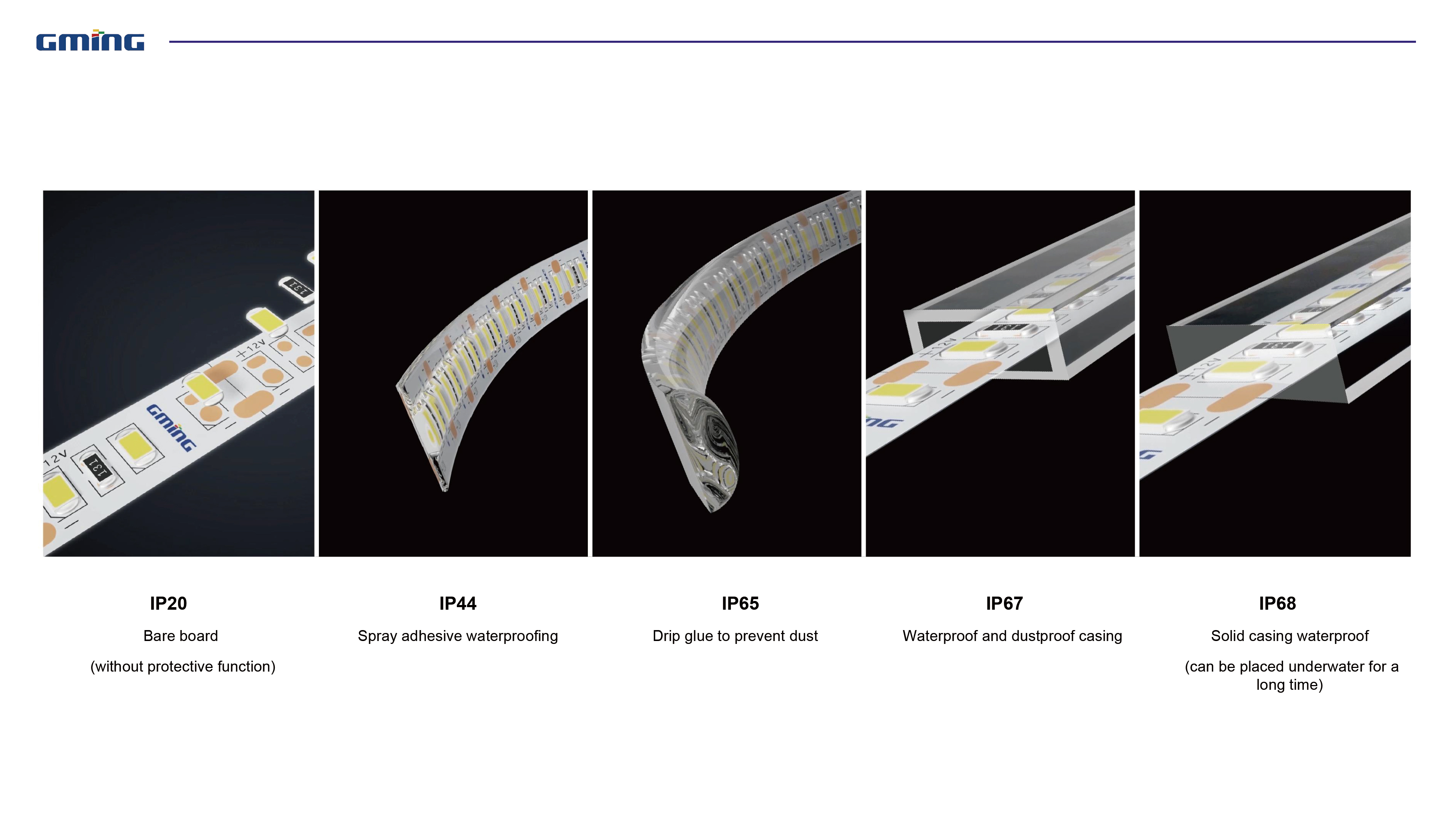
IP는 다음을 의미합니다. 침투 보호 (제품이 고체와 액체를 얼마나 잘 차단하는지). 항상 두 자리 숫자입니다.
첫 번째 숫자 (0–6) : 이물질(먼지, 흙, 손가락)로부터 보호
두 번째 숫자 (0–8) 액체(물, 습기)로부터의 보호
LED 스트립의 경우, IP20, IP65, IP67, IP68과 같은 방수/방진 등급을 흔히 볼 수 있습니다. 각 등급이 설치에 어떤 의미를 갖는지 자세히 알아보겠습니다.
이것은 무엇인가: 코팅이나 덮개가 전혀 없는 LED 스트립입니다. 회로 기판과 LED 칩이 완전히 노출되어 있습니다.
보호 수준:
고체: 12mm보다 큰 블록 형태의 물체 (손가락 크기 정도, 먼지는 제외)
액체류: 없음 – 전혀 보호되지 않음
다음과 같은 경우에 가장 적합합니다:
캐비닛이나 서랍 안쪽
TV나 모니터 뒤에
책상 아래나 선반 아래
어딘가에 완전히 건조됨 먼지나 습기에 노출되지 않음
장점: 가장 저렴한 옵션, 최고의 열 방출 성능, 가장 쉽게 자르고 연결할 수 있는 제품
단점:
습기에 전혀 강하지 않아 물 한 방울이나 높은 습도에도 손상될 수 있습니다.
⚠️ IP20은 절대 사용하지 마세요: 욕실, 주방(싱크대 근처), 실외 또는 결로 현상이 발생하는 모든 곳
이것은 무엇인가: LED 스트립은 표면에 실리콘 또는 에폭시 수지 층으로 코팅되어 있습니다. 측면과 끝부분은 밀봉되지 않으면 노출될 수 있습니다.
보호 수준:
고체: 방진 먼지가 들어갈 수 없습니다.
액체: 보호 기능 저압수 분사 (물 튀김이나 비는 괜찮지만, 물에 완전히 잠기는 것은 안 됩니다.)
다음과 같은 경우에 가장 적합합니다:
처마 밑이나 지붕이 있는 테라스
주방 싱크대 하부 조명
욕실 세면대 조명 (샤워기 물줄기가 직접 닿지 않는 곳에 설치)
청소가 필요한 소매점 진열대
간판 및 채널 문자
장점: 보호 기능과 가격의 균형이 잘 잡혀 있고, 유연하며, 자르기 쉽습니다 (단, 자른 끝부분은 다시 밀봉해야 합니다).
단점:
물에 담그면 안 되며, 절단 후 끝부분을 수동으로 밀봉해야 합니다.
꿀팁: IP65 등급은 일반적으로 주거용 실외 환경의 90%에 적합한 선택입니다. 단, LED 스트립이 물웅덩이에 잠겨 있거나 폭우에 완전히 노출되는 경우는 제외합니다.
이것은 무엇인가: LED 스트립 전체가 케이스에 싸여 있습니다. 실리콘 튜브 (속이 비어 있거나 채워져 있음). 튜브는 양쪽 끝이 밀봉되어 있습니다.
보호 수준:
고체: 방진
액체: 보호 기능 일시적 침수 수심 1미터 이내에서 30분간
다음과 같은 경우에 가장 적합합니다:
정원 연못이나 분수 조명 (완전 수중 설치형)
물이 고일 수 있는 야외 계단이나 통로
보트, 부두 또는 해양 관련 용도
비에 직접 노출되는 습한 장소 (처마가 없는 곳)
장점: 완전 방수 기능으로 물속에 잠겨도 안전하며, 내구성이 뛰어나 극한 기후 조건에서도 사용 가능합니다.
단점:
IP65보다 두껍고 유연성이 떨어지며, 절단하기 어렵고(튜브를 다시 밀봉해야 함), 가격이 더 비쌉니다.
⚠️ 메모: 실리콘 튜브에 담긴 IP67 등급의 절연 스트립은 튜브에 없는 스트립보다 "더 뻣뻣한" 느낌을 줄 수 있습니다. 직선 구간에는 적합하지만, 좁은 모서리나 복잡한 모양에는 이상적이지 않습니다.
이것은 무엇인가: IP67과 유사하지만 더 높은 수준의 방수 기능을 제공합니다. 일반적으로 완전 캡슐화됨 공기 틈이 없는 스트립.
보호 수준:
고체: 방진
액체: 보호 기능 연속 침수 수심 1미터 이상 (제조업체에서 지정하는 수심은 일반적으로 최대 3미터)
다음과 같은 경우에 가장 적합합니다:
수영장이나 스파의 수중 조명
수족관
영구 수중 분수
지속적인 물 노출이 필요한 해양 또는 산업 응용 분야
장점: 최고의 방수 기능을 제공하며, 가장 까다로운 환경에서도 사용할 수 있습니다.
단점:
가장 비싸고, 유연성이 떨어지며, 절단이나 맞춤 제작이 어렵고, 거의 모든 가정용 용도에는 과도한 성능을 자랑합니다.
꿀팁: 스트립을 실제로 물속에 완전히 담그지 않는 한 영구적으로 아마 IP68 등급은 필요 없을 겁니다. IP67 등급이면 가끔 물에 잠기는 정도는 충분히 견딜 수 있습니다.
| IP 등급 | 먼지 보호 | 물 보호 | 유연성 | 절단 | 일반적인 사용 |
|---|---|---|---|---|---|
| IP20 | 낮은 | 없음 | 높은 | 쉬운 | 건조한 실내 환경 (캐비닛, TV 백라이트) |
| IP65 | 방진 | 생활 방수 | 높은 | 간편함 (끝부분 밀봉) | 지붕이 있는 야외 공간, 주방, 욕실 |
| IP67 | 방진 | 일시적 침수(1m/30분) | 중간 | 단단함(튜브 재밀봉) | 연못, 계단, 직사광선 |
| IP68 | 방진 | 연속 침수(>1m) | 낮은 | 매우 어려움 | 수영장, 수족관, 해양 |
실수 #1: "처마 밑에 있으니" IP20 등급 방수/방진 제품을 실외에 사용하는 것
습기, 아침 이슬, 바람에 날리는 비는 IP20 등급의 방수 스트립을 몇 주 안에 손상시킬 수 있습니다. 직접 비를 맞지 않더라도 공기 중의 습기만으로도 충분합니다.
두 번째 실수: 지붕이 있는 파티오에 IP68 등급 제품을 구매하는 것
당신은 절대 사용하지 않을 방수 기능에 돈을 낭비하고 있는 겁니다. IP65 등급이면 지붕이 있는 야외 공간에는 충분합니다.
실수 #3: IP65 또는 IP67 등급의 스트립을 자르고 절단면을 밀봉하지 않는 것
방수 스트립을 자르면 절단면에 구리 패드가 노출됩니다. 이 부분이 젖으면 스트립이 합선될 수 있습니다. 따라서 절단면은 항상 실리콘 실런트나 접착식 열수축 튜브로 밀봉하십시오.
실수 #4: "방수"라는 말이 어디든 설치할 수 있다는 뜻으로 오해하는 것
IP68 등급의 보호 스트립이라도 한계가 있습니다. 담수용으로 설계된 제품이므로 염수, 화학 물질 또는 극한 온도에서는 손상될 수 있습니다.
1단계: 해당 스트립이 물이나 습기에 노출될 가능성이 있습니까?
아니요 → IP20
예 → 2단계로 이동
2단계: 어디에 설치하나요?
실내이지만 싱크대, 샤워기 또는 습도가 높은 곳 근처 → IP65
외부, 지붕 아래 (처마, 퍼골라, 현관) → IP65
바깥, 비에 완전히 노출됨 → IP67
연못, 분수 또는 수영장에서 → IP68
(수족관, 수영장 바닥 등) 영구적으로 물에 잠겨 있음 → IP68
IP 등급이 실제로 무엇을 방지하는지 이해하면 적절한 IP 등급을 선택하는 것은 복잡하지 않습니다. 황금률은 다음과 같습니다. 환경적 요구 사항을 충족하는 가장 낮은 등급의 제품을 구매하세요. 하지만 절대 요구되는 수준 이하로 내려가서는 안 됩니다.
대부분의 가정 사용자에게 해당되는 사항:
실내, 건조한 환경: IP20
실내, 습한 곳 또는 물 근처: IP65
야외, 보호된 환경: IP65
야외, 노출된 상태: IP67
프로젝트에 맞는 등급의 LED 스트립을 고르는 데 시간을 조금 더 투자하세요. 그러면 고장난 스트립을 교체하는 번거로움을 피할 수 있고, 첫 비에 망가진 조명 프로젝트 때문에 겪는 좌절감도 덜 수 있습니다.
프로젝트에 맞는 스트립을 고를 준비가 되셨나요? IP20, IP65, IP67, IP68 등급의 LED 스트립 전체 제품군을 살펴보세요. 모든 제품은 공장 직송으로 품질을 보장합니다. 어떤 제품이 설치 환경에 적합한지 잘 모르시겠나요? 설치 공간 사진 몇 장을 저희 팀에 보내주시면 최적의 솔루션을 추천해 드리겠습니다.
더 자세히 알고 싶으신가요? 조명 프로젝트를 처음부터 끝까지 원활하게 진행할 수 있도록 전원 공급 장치 선택 및 설치 모범 사례에 대한 가이드를 확인해 보세요.
 English
 français
 español
 العربية
 한국의
한국의

 우리 매장
우리 매장


 IPv6 네트워크가 지원됩니다
